
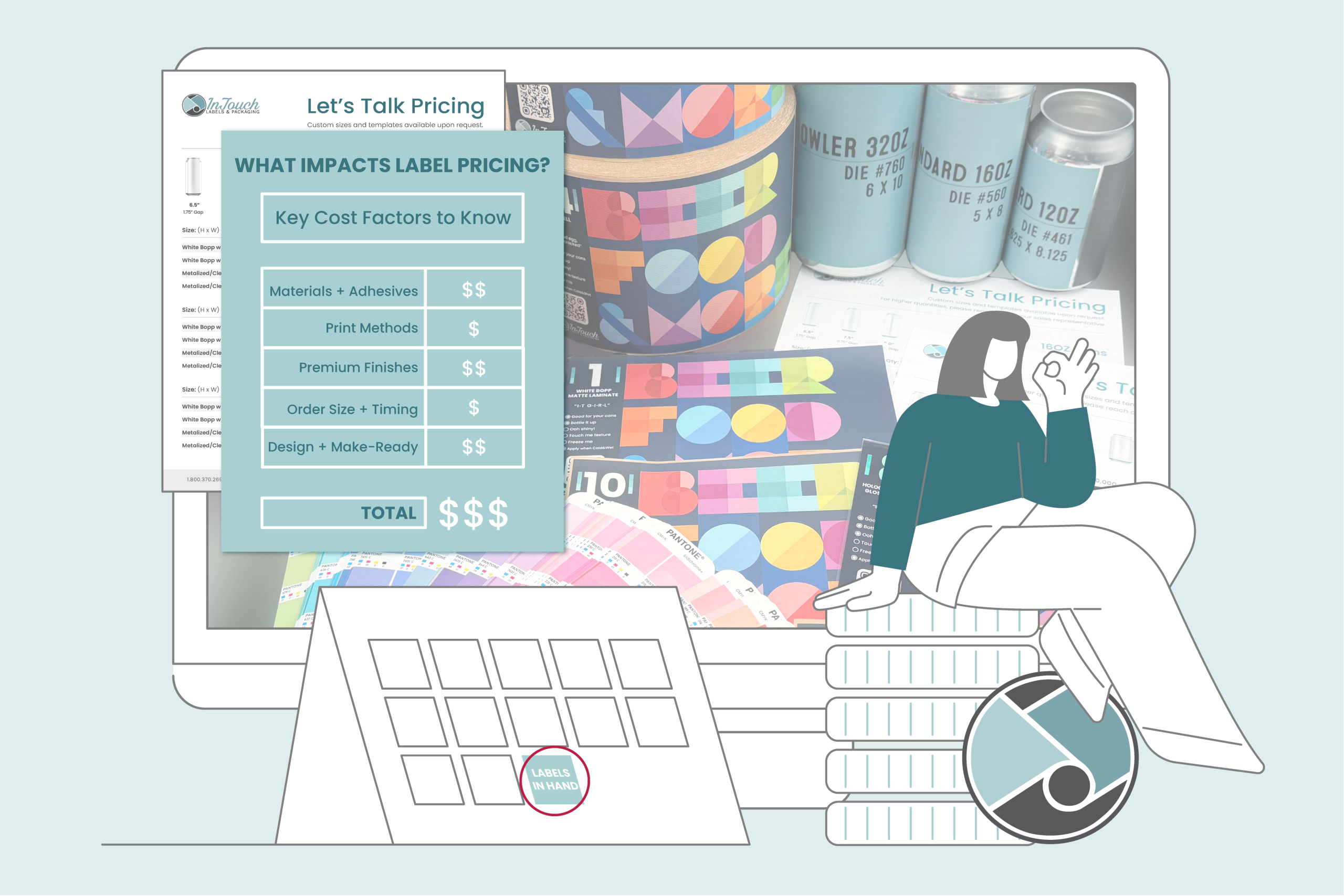
A custom label can shape how customers see your product before they even pick it up. But price isn’t based on a single factor. All play a role in the final quote. Knowing what drives cost can help you avoid surprises, compare options more confidently, and choose a solution that supports your product, brand, and budget.
The cost considerations include:
- Materials and Adhesives
- Print Methods
- Premium Finishes
- Order Size and Timing
- Design or Make-Ready Services
- Sustainability Goals
Label Materials and Adhesives
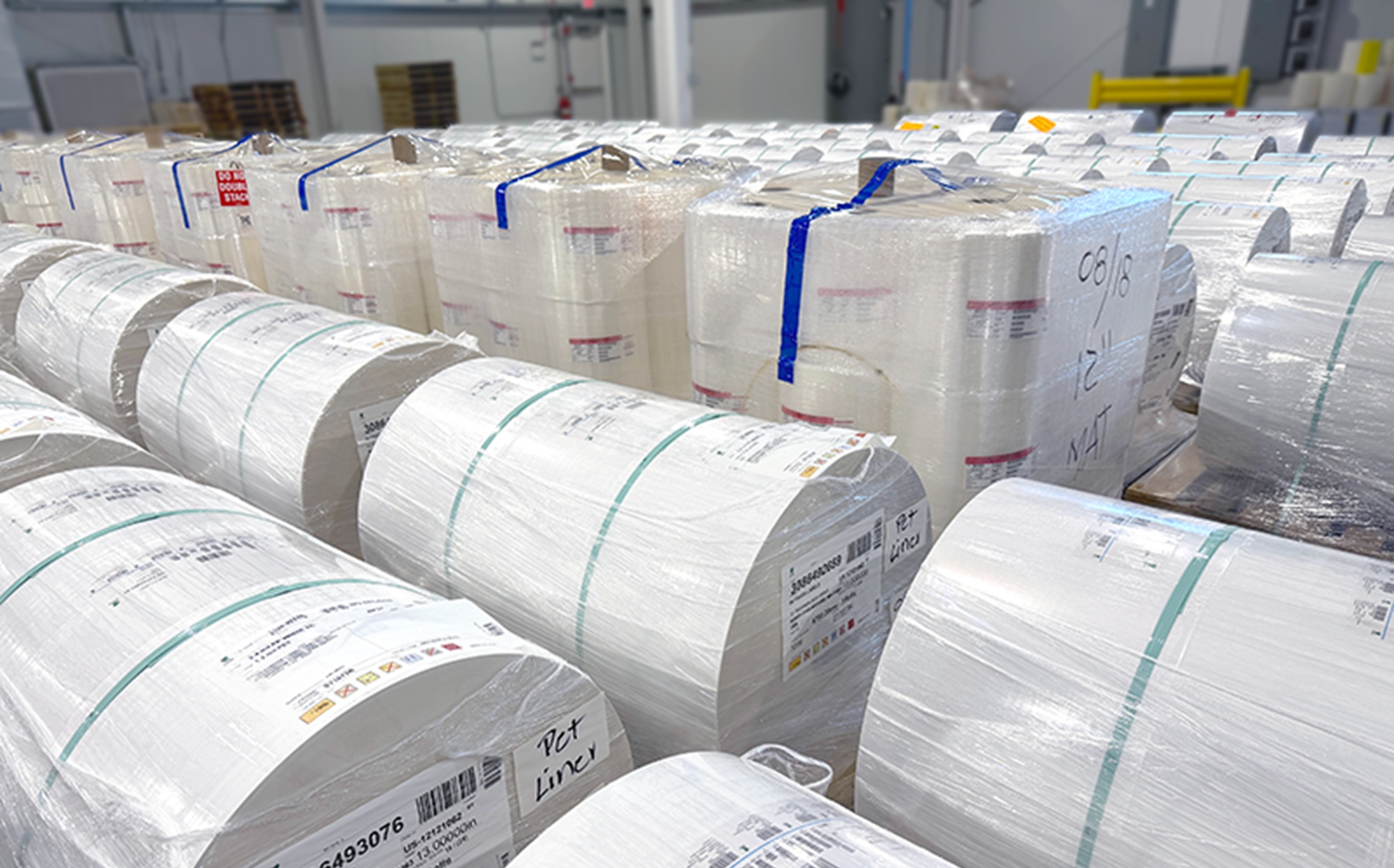
Photo 1: Label Stock and Laminate rolls on pallets.
Materials are one of the biggest cost drivers. Paper is often the most affordable choice, while films and specialty materials usually cost more because they perform better in wet, cold, outdoor, or high-contact environments.
Adhesives also affect price and performance. Permanent adhesives are common and budget-friendly. Removable, freezer-grade, chemical-resistant, or tamper-evident options may cost more, but they can be important for specific products or environments.
For products with sustainability goals, review material selection early so you can balance cost, performance, and availability.
Custom Label Printing Methods
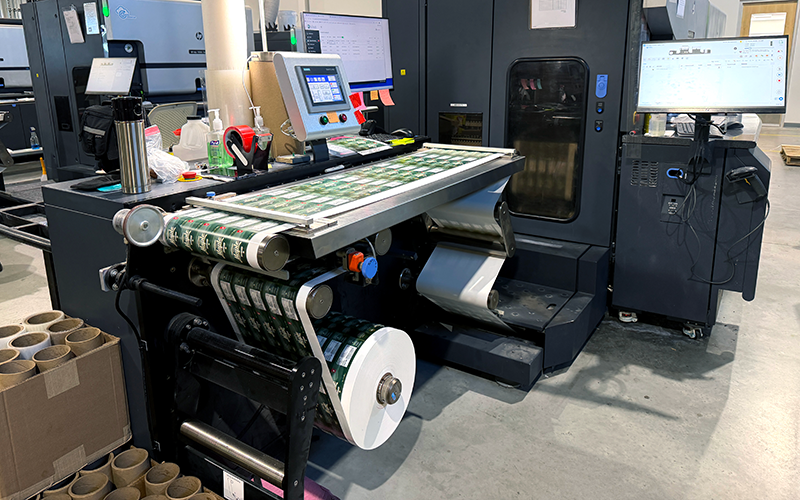
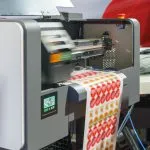
Photo 2: Custom Label being printed on an HP Indigo Digital Press.
The right print method depends on your order size, artwork, timeline, and number of label versions. Digital printing is often a strong fit for short runs, multiple SKUs, and fast turnaround needs. Flexographic printing is often best for larger, consistent runs where setup costs can be spread across more labels.
Color choices can also affect cost. Standard full-color printing is common, while spot colors, metallic inks, white ink, and specialty effects may add setup time, materials, and production steps.
Compare digital and flexographic printing to see which option fits your label project: Why Digital Presses Get Labels to Market Faster
Premium Label Finishes
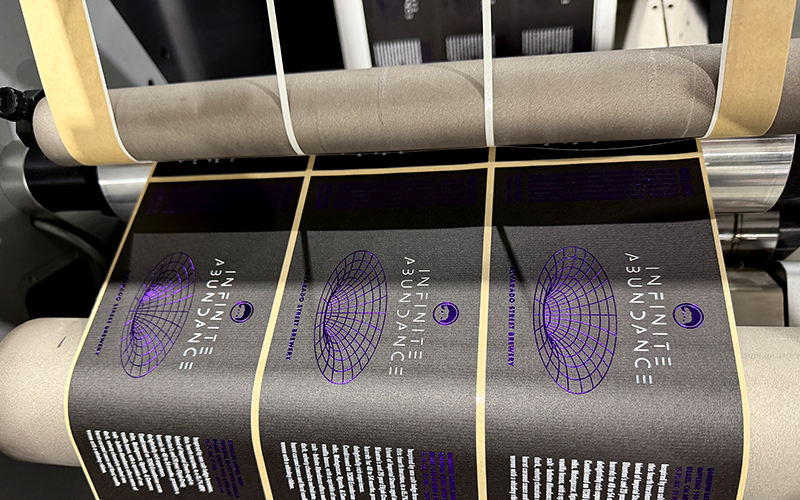
Photo 3: Hot Stamp Foil job on Finisher.
Finishes protect the label and help it stand out. Varnish is often a cost-conscious option for added protection or visual contrast, while lamination offers stronger durability for moisture, abrasion, or heavy handling.
Premium effects like embossing, hot foil, and specialty textures can create stronger shelf appeal, but they may add tooling, materials, and production time. Label size and shape also matter because intricate shapes or very small labels can increase waste and slow production.
Explore specialty label finishes like spot UV, hot foil, and embossing: How Foil and Embossing Increase Retail Packaging Shelf Appeal
Order Size, Timing, and Efficiency
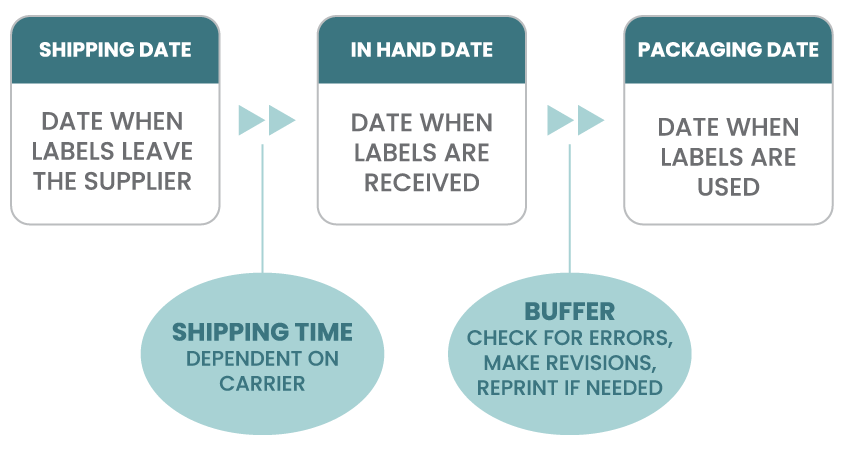
Photo 4: Sample Printed Label Timeline from “Label Printing Lead Times – Why am I Always in a Rush?”
Order size and timing can significantly affect the final quote. Larger runs often reduce the per-label cost because setup is spread across more pieces. Planning ahead can also help avoid rush fees, expedited shipping, and last-minute material changes.
Print-Ready Artwork and Proofing
Clean, print-ready artwork helps keep projects on schedule and reduces extra preparation time. Clear bleeds, outlined fonts, embedded images, and accurate color details can prevent delays, rework, and reprints.
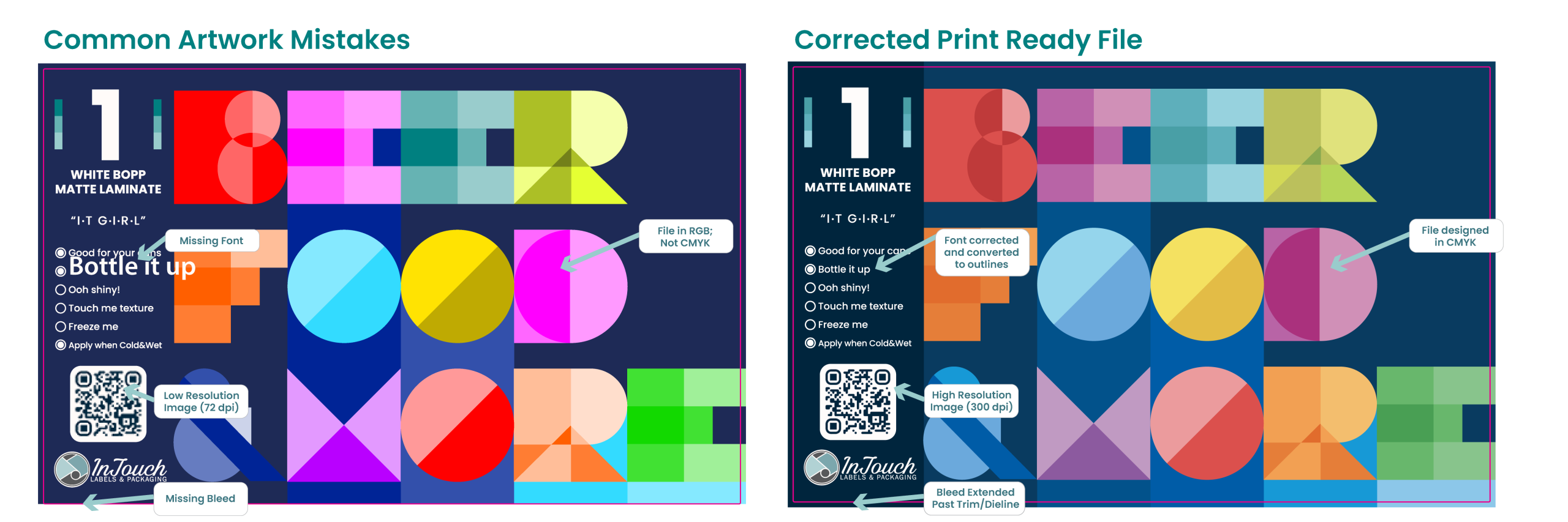
Photo 5: Side-by-Side comparison of Common Artwork Mistakes and how to fix them.
Review artwork setup tips to help keep your label order on schedule: How to Prepare Files for Professional Label Printing
Sustainable Label Options
Sustainable options, such as recycled-content papers, FSC-certified papers, compostable materials, film alternatives, and wash-off adhesives, can help support brand values and sustainability goals. They may cost more than standard materials, but they can add value when sustainability is part of the product story, retailer strategy, or customer expectation.
The best choice still depends on the container, product environment, application method, and any sustainability claims tied to the packaging. Reviewing these options early helps confirm material availability, adhesive performance, and lead times before the project is quoted.
How to Manage Custom Label Pricing
The best way to manage pricing is to start with clear goals. When you know how the label needs to look, where it will be used, and how quickly you need it, your label partner can recommend the right balance of materials, finishes, and production methods.
Quick Reference Guide: Custom Label Pricing Factors
| Pricing Factor | How It Can Affect Cost |
| Materials | Paper is often more affordable, while films and specialty materials may cost more for added durability. |
| Adhesives | Standard permanent adhesives are typically budget-friendly. Specialty adhesives can add cost. |
| Sustainable Options | Recycled-content, FSC-certified, compostable, wash-off, or recycling-friendly options may add cost but can support brand goals, retailer requirements, and packaging sustainability claims. |
| Print Method | Digital printing can work well for shorter runs, while flexographic printing can be more efficient for larger orders. |
| Finishes | Varnish, lamination, foil, embossing, and other effects can improve appearance or protection but may add production steps. |
| Size and Shape | Standard shapes and sizes can help reduce waste. Intricate shapes may increase production time. |
| Order Quantity | Larger orders often lower the cost per label by spreading setup costs across more pieces. |
| Artwork Readiness | Clean, print-ready files can help avoid delays, extra prep time, and reprints. |
| Timeline | Rush orders, expedited shipping, and last-minute changes can increase overall cost. |
Need help finding the right solution for your next project? Contact InTouch Labels & Packaging to discuss your materials, finishes, timeline, and budget. Our team can help you compare options and choose a label that fits your product, brand, and production needs.